Skip to Content

Energy self-sufficiency


|

If the earth is nourishing, the sun and wind are the fuels of Foster.

The bet on energy autonomy at Foster: to achieve 85% self-sufficiency all year round. Every day, the people of Foster benefit from green and local electricity.
Foster is moving forward. And so is the mastery of energy production and storage.

|

CONTACT US


MEETING THE CHALLENGE OF SELF-SUFFICIENCY


Here is the combination that allows Foster Rosières to operate every day, in near energy autonomy:

• 222 photovoltaic panels
• 24 m high for the wind turbine
• 108 batteries to store electricity
• 4 charging stations for cars
• 130,000 kWh consumed each year

The day, sun and wind power the site. At night, the wind turbine takes over. Day and night, the inverters and batteries manage production, storage and consumption to meet the needs of the farm.
This project would not have come to fruition without the Enersol team, which was able to design a reliable system in a semi-isolated site.

|

Next step?

Achieve 85% autonomy, display live production, and above all, the tonnes of CO₂ saved.

|

SUBSCRIBE TO OUR NEWSLETTER


REAL-TIME MONITORING


Nothing is left to chance, especially when welcoming guests from morning until late at night. Today, everything is monitored in real time, and adjustments are made continuously.

Every day, the Fosterrians benefit from green and local electricity.
They occupy the offices, host meetings in the rooms, start productions in their workshop, send dishes from the kitchen, welcome their teams, clients, and suppliers every day, all year round.
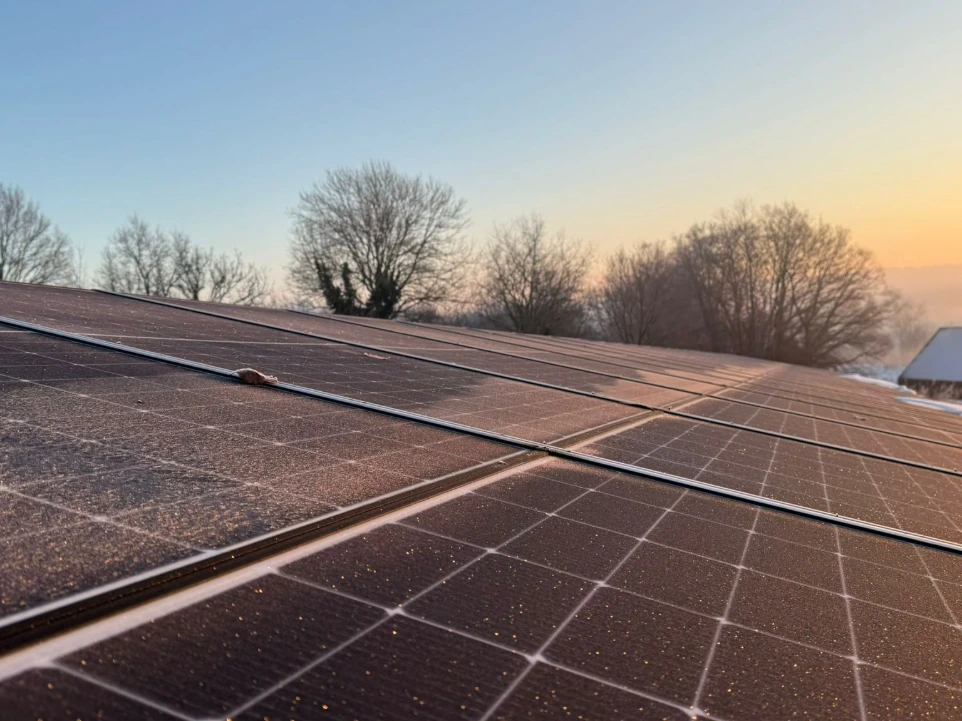
Foster est en quasi autosuffisance énergétique grâce aux parc de panneaux photovoltaïques installé en site semi-isolé
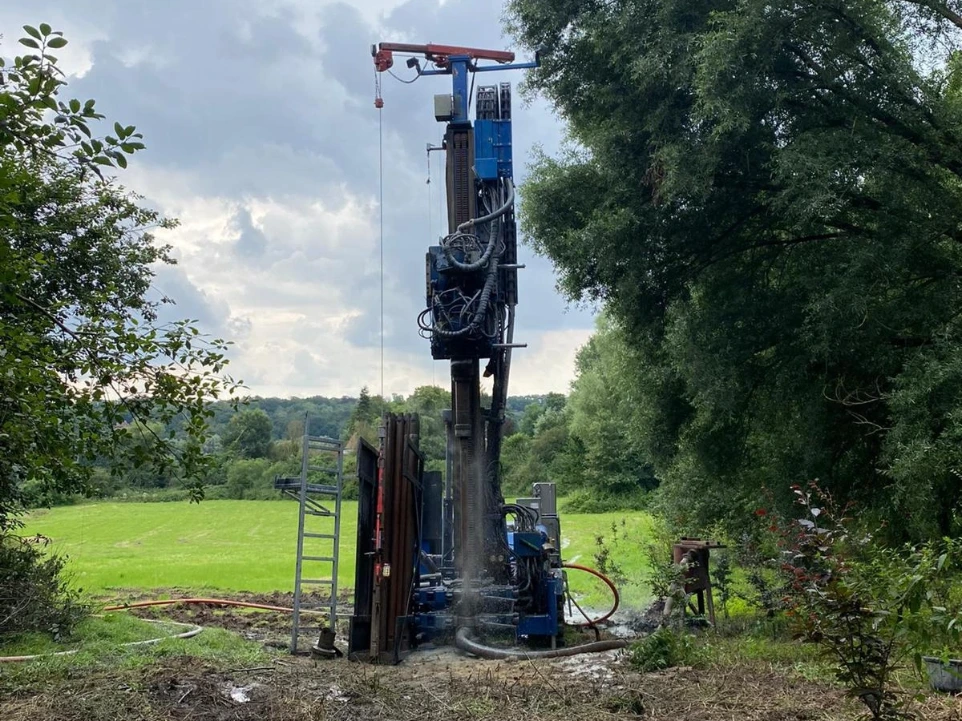
Le Domaine de Foster Rosières est installé dans le bassin des nappes phréatiques de la rivière Lasne. Un puits a été foré à plus de 60 mètres pour accéder à l'eau potable en consommation raisonnée et raisonnable


AUTONOMY IN DRINKING WATER


While Foster is one of the first buildings in Wallonia to achieve near energy self-sufficiency, the entire Foster site is also self-sufficient in water from the ground and the sky.

Foster is located within the groundwater catchment area of the Lasne basin. The well, which goes down more than 60 metres, provides the entire site with drinking water, including Osan Drinks for its production.

In addition to this well, a rainwater harvesting system has been installed to supply the vegetable garden and the market gardens of Foster.
Finally, a pond has been created to store water for the surrounding crops and to provide a refuge for biodiversity – fish, amphibians, and birds find their happiness there.


ACCEPTING THE UNPREDICTABILITY OF NATURE


We will remember a March evening when a simple adjustment, slightly off, was enough to plunge the Écorce room into darkness. The conference then turned into a candlelit moment, while about ten guests at Màloma discovered an improvised candlelit dinner. More than a hundred people gathered, without electricity, but carried by an atmosphere that no one will forget.

This evening reminded us of a truth often overlooked: sustainability has a cost. It involves accepting the whims of nature, working with the wind, the sun, and their caprices. Every day, they remind us that human activity does not dominate nature — it depends on it.
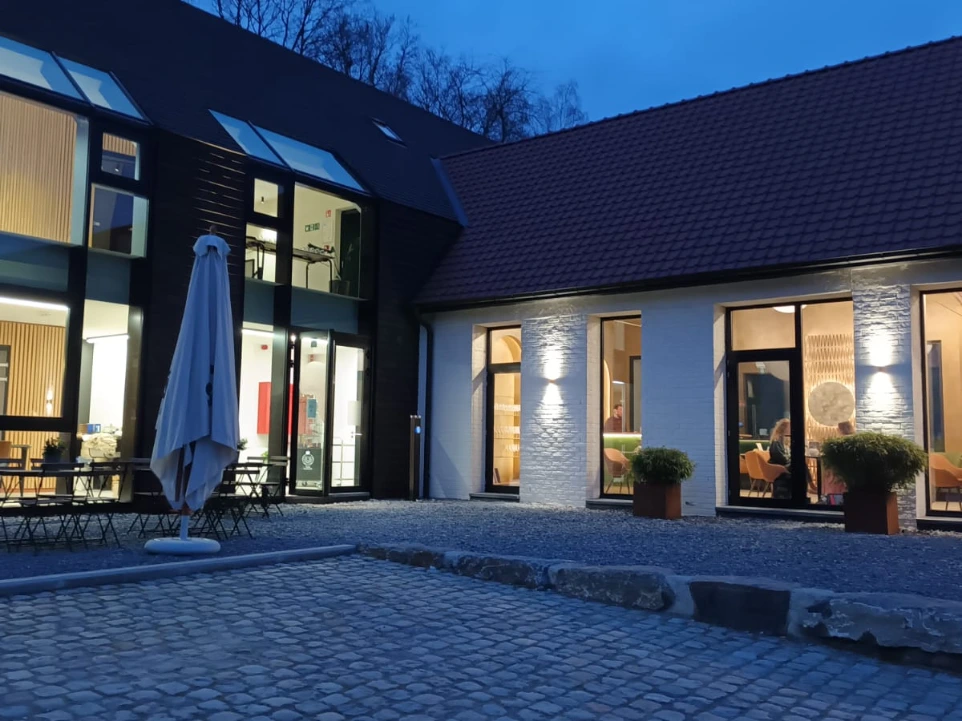

Le défi de l'autosuffisance énergétique ne doit pas nous faire oublier que la durabilité a un coût : accepter les aléas de la nature, du vent et de soleil.

UNIQUE LOCATION

At the E411 exit of Rosières, accessible in both directions Brussels-Luxembourg and Luxembourg-Brussels.

Close to major roads, 15 km from the Brussels Ring Road, easily accessible from the E42 and E40.

Less than 10 minutes from the urban and industrial areas of Wavre, Nivelles and Louvain-la-Neuve.
IN THE MIDDLE OF NATURE

The Foster farm where the workshops are located is surrounded by greenery: meadows, crops, woods, ponds and gardens.

It thus offers a particularly pleasant working environment for craftsmen.

Craftsmen also benefit from an ideal place to showcase their expertise to partners and consumers.
SUSTAINABILITY

Foster is one of the first buildings in Wallonia to be nearly energy self-sufficient.

A park of photovoltaic panels, small wind turbines and storage batteries are installed behind the farm to power the various spaces.

In addition, the estate has natural drinking water and a wastewater recycling system.

Our latest articles

Discover the news from Foster and the Fosterriens !

Votre snippet dynamique s’affichera ici... Ce message s’affiche car vous n’avez pas fourni suffisamment d’options pour en récupérer le contenu.