|
Rehabilitating an abandoned site to give it new life is the challenge we face every day on our estate.
Here, every action aims to promote biodiversity and create an ecosystem where market gardeners, orchards, and small livestock can find their place.
|
A PILOT FARM ABOVE ALL
"On these 30 hectares, we cultivate much more than vegetables and fruits! We cultivate a new way of producing, collaborating, and respecting life."
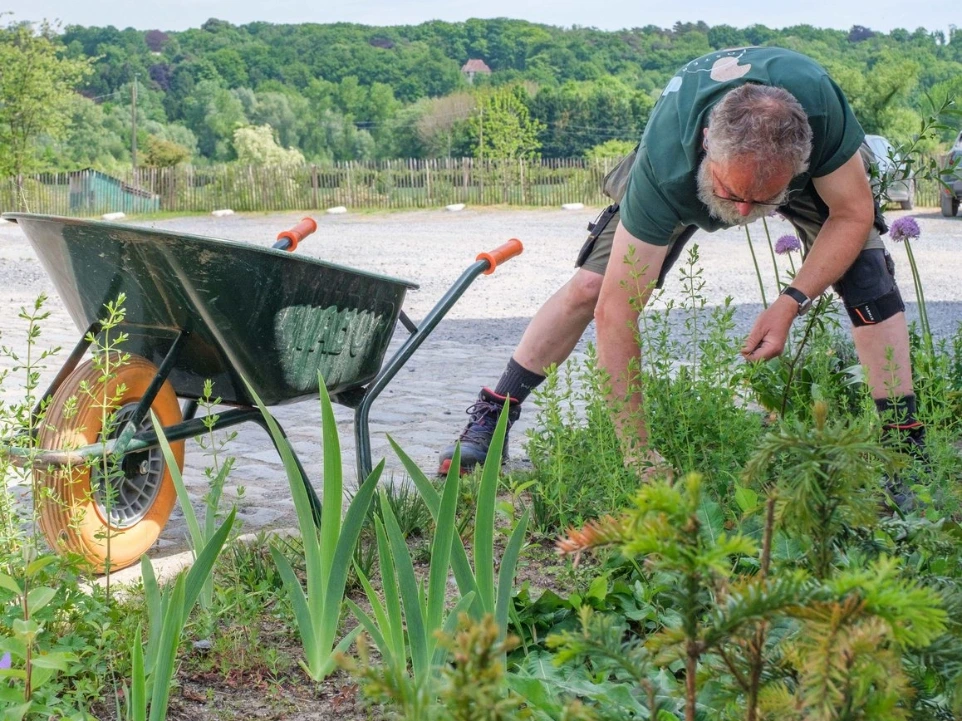
Thanks to the commitment of our pioneer Stéphanie de Bellefroid, the foot of the pond has come alive with herbs, edible and ornamental flowers.
Soon, chef Georges Athanassopoulos (restaurant Maloma) will be able to draw from a vegetable garden adorned with forgotten vegetables, aromatic flowers, and enjoy reception spaces in the garden.
Agriland, Robert de l’Escaille and his team have been advising us since the beginning of the project on the gradual rehabilitation of the soils.
|
Obtaining the Slow Food - Slow Farm label encourages us to go further in our agroecological approach.
|
REPLANT AND REDESIGN THE LANDSCAPE
"There was nothing when I arrived here," says Rodolphe, the head of the green spaces at Foster.
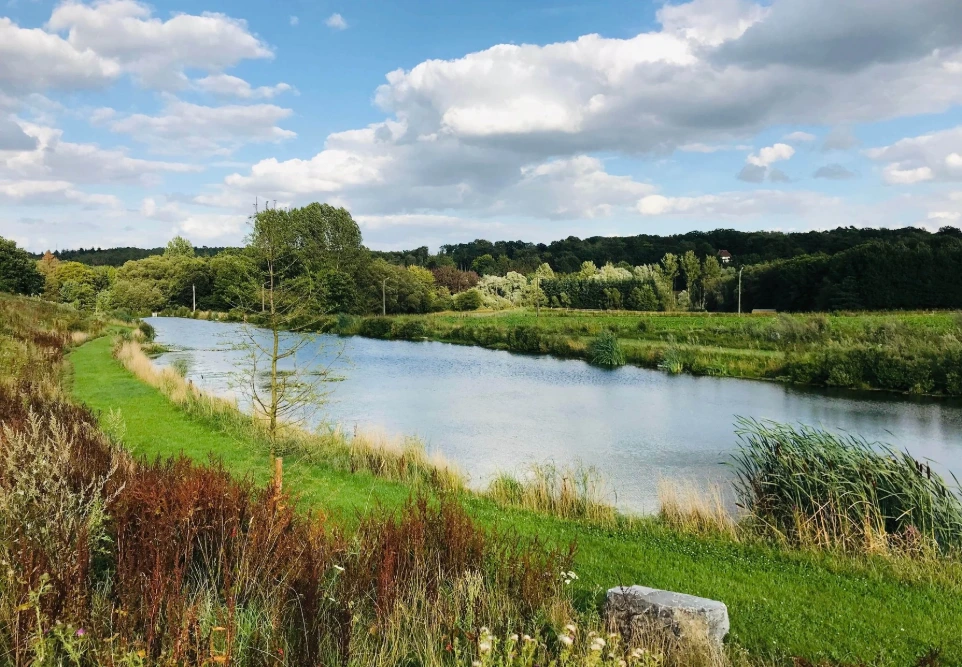
To hope to see nature develop again, both in terms of crops and flora and fauna, it was necessary to replant and redesign the landscape.
Planting so many hedges and trees on land that was not originally meant to accommodate them was a gamble. A few years later, the result is here: the hedges are rising, the trees are bearing their first fruits, and the landscape — entirely rethought for nature — is reborn.
Biodiversity is returning, life is flowing again, and Foster is becoming a place where people enjoy working, meeting, tasting exceptional products… or simply relaxing...like the pair of swans that return to the pond each year.
AGROECOLOGY AT FOSTER
We focus on quality, sustainability, and harmony with nature, far from the race for yield. This philosophy takes shape, year after year, around four main axes:
- Ecosystemic design: Respect for time, agroforestry (hedges, trees, pond), restoration of orchards with local varieties.
- Regenerative polyculture: A mix of vegetables, berries, herbs, flowers, cereals, and dye plants, seasonal and diverse production in small batches.
- Rebuilding soil health: Regenerative organic practices to enhance the vitality of the land in the long term.
- Resource management: Rainwater harvesting and reliance on natural springs to limit intensive irrigation and the use of chemical inputs.
A WORK OF PATIENCE AND DEDICATION
It is a foundational task, sometimes lengthy, but essential to test, prove, and defend a more sustainable model — even if, for now, we are progressing on a smaller scale at Foster Rosières.
The most important thing? To be on the path, determined to anchor a gentle agronomy, where the land and water dictate the rhythm of our crops.

UNIQUE LOCATION
At the E411 exit of Rosières, accessible in both directions Brussels-Luxembourg and Luxembourg-Brussels.
Close to major roads, 15 km from the Brussels Ring Road, easily accessible from the E42 and E40.
Less than 10 minutes from the urban and industrial areas of Wavre, Nivelles and Louvain-la-Neuve.
IN THE MIDDLE OF NATURE
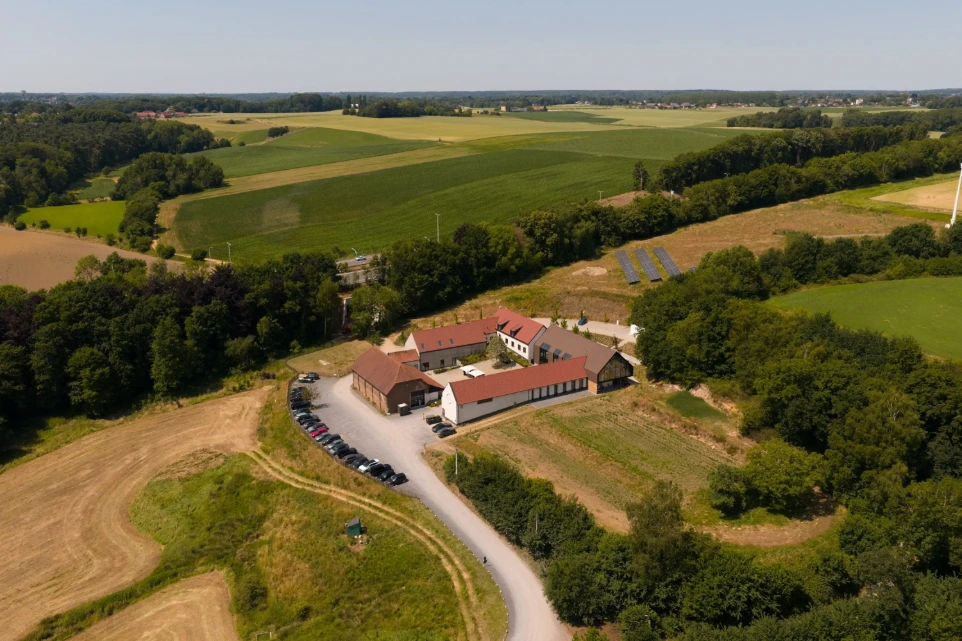
The Foster farm where the workshops are located is surrounded by greenery: meadows, crops, woods, ponds and gardens.
It thus offers a particularly pleasant working environment for craftsmen.
Craftsmen also benefit from an ideal place to showcase their expertise to partners and consumers.
SUSTAINABILITY
Foster is one of the first buildings in Wallonia to be nearly energy self-sufficient.
A park of photovoltaic panels, small wind turbines and storage batteries are installed behind the farm to power the various spaces.
In addition, the estate has natural drinking water and a wastewater recycling system.
Nos derniers articles
Découvrez les actualités de Foster et des Fosterriens